
Step right up to the latest research on Alzheimer’s disease! Get ready to dive into a world of fascinating discoveries and cutting-edge findings in the field of neurology. Brace yourself for an enlightening journey filled with intriguing insights and promising developments.
Overview of Alzheimer’s Disease
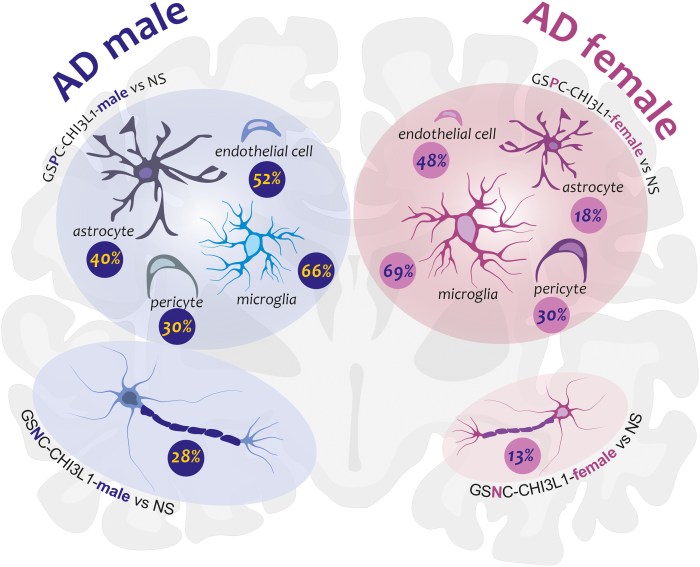
Alzheimer’s disease is a progressive neurological disorder that affects the brain, leading to memory loss and cognitive decline. Let’s explore the key features, symptoms, prevalence, and impact of this debilitating condition.
Brief History of Alzheimer’s Disease Research
Alzheimer’s disease was first identified by German psychiatrist Alois Alzheimer in 1906 when he observed unusual changes in the brain tissue of a deceased patient. Since then, researchers have made significant advancements in understanding the pathology and progression of the disease.
Key Features and Symptoms of Alzheimer’s Disease
- Memory loss: Individuals with Alzheimer’s disease often experience difficulty remembering recent events or information.
- Cognitive decline: This includes challenges with reasoning, problem-solving, and decision-making.
- Behavioral changes: Patients may exhibit agitation, confusion, or mood swings.
- Difficulty with daily tasks: Simple activities like dressing or cooking become challenging as the disease progresses.
Prevalence and Impact of Alzheimer’s Disease Globally
Alzheimer’s disease is the most common cause of dementia worldwide, affecting millions of individuals and their families. The prevalence of the disease is expected to rise with an aging population, posing a significant burden on healthcare systems and caregivers.
Causes and Risk Factors
Alzheimer’s disease is a complex condition with various factors that can contribute to its development. Understanding the causes and risk factors is crucial in the study and management of this debilitating disease.
Known Causes of Alzheimer’s Disease
Alzheimer’s disease is primarily caused by the build-up of beta-amyloid plaques and tau protein tangles in the brain. These abnormal protein deposits disrupt the communication between nerve cells and eventually lead to cell death and tissue loss in the brain.
Role of Genetics in Alzheimer’s Disease
Genetics play a significant role in the development of Alzheimer’s disease. Individuals with a family history of the disease are at a higher risk of developing it themselves. Mutations in certain genes, such as the APOE gene, have been linked to an increased susceptibility to Alzheimer’s disease.
Various Risk Factors for Alzheimer’s Disease
Age
Advanced age is the greatest risk factor for Alzheimer’s disease, with the majority of cases occurring in individuals over the age of 65.
Family History
Having a parent or sibling with Alzheimer’s disease increases the risk of developing the condition.
Cardiovascular Health
Conditions such as high blood pressure, heart disease, and diabetes can increase the risk of Alzheimer’s disease.
Head Trauma
A history of severe head injuries has been associated with a higher risk of developing Alzheimer’s disease.
Lifestyle Factors
Factors such as smoking, lack of physical activity, poor diet, and social isolation can also contribute to the risk of developing Alzheimer’s disease.
Diagnosis and Screening
Diagnosing Alzheimer’s disease involves a combination of medical and cognitive assessments to rule out other possible causes of symptoms.
Current Methods for Diagnosing Alzheimer’s Disease
- Medical history evaluation
- Physical and neurological exams
- Cognitive tests to assess memory and thinking skills
- Brain imaging scans like MRI or PET scans
- Blood tests to rule out other conditions
Importance of Early Detection in Alzheimer’s Disease
Early detection allows for timely intervention and treatment, potentially slowing down the progression of the disease and improving quality of life for patients.
Comparison of Screening Tools and Techniques
- Mini-Mental State Examination (MMSE): A widely used screening tool to assess cognitive impairment.
- Montreal Cognitive Assessment (MoCA): Another test to evaluate cognitive function, especially in detecting mild cognitive impairment.
- Brain imaging techniques: PET scans and MRIs can help visualize changes in the brain associated with Alzheimer’s.
- Cerebrospinal fluid analysis: Looking for biomarkers in the fluid surrounding the brain can help in early detection.
Latest Research Findings
Recent breakthroughs in Alzheimer’s disease research have provided new insights into the underlying mechanisms of the disease, offering hope for improved treatment options in the future. One of the key areas of focus in current research is the role of inflammation in Alzheimer’s disease progression, with studies exploring the impact of immune system dysfunction on cognitive decline.
Innovative Treatment Approaches
- Researchers are investigating the potential of using anti-inflammatory drugs to target inflammation in the brain and slow down the progression of Alzheimer’s disease.
- Studies are also looking into the efficacy of gene therapy in delivering targeted treatments to affected areas of the brain, aiming to reduce the buildup of toxic proteins associated with Alzheimer’s.
Impact of Lifestyle Factors
- Recent research has highlighted the importance of lifestyle factors such as diet, exercise, and social engagement in reducing the risk of developing Alzheimer’s disease.
- Regular physical activity has been shown to have a protective effect on brain health, potentially slowing cognitive decline in individuals at risk for Alzheimer’s.
- Healthy dietary habits, including a diet rich in antioxidants and omega-3 fatty acids, have been associated with a lower incidence of Alzheimer’s disease.
Connection with Other Conditions and Diseases
Alzheimer’s disease is not an isolated condition and is often linked to other neurological disorders and diseases. Understanding these connections is crucial in providing comprehensive care for individuals affected by Alzheimer’s.
Neurological Conditions Linked to Alzheimer’s
- Parkinson’s Disease: Studies have shown a correlation between Parkinson’s disease and Alzheimer’s, with shared pathological mechanisms.
- Vascular Dementia: Vascular dementia is another common form of dementia that often coexists with Alzheimer’s due to shared risk factors such as hypertension and diabetes.
- Frontotemporal Dementia: This type of dementia can also occur alongside Alzheimer’s and is characterized by changes in behavior, personality, and language.
Alzheimer’s Disease and Cardiovascular Diseases
There is a significant relationship between Alzheimer’s disease and cardiovascular diseases, with shared risk factors and potential mechanisms.
Research has shown that conditions like high blood pressure, high cholesterol, and diabetes, which are risk factors for cardiovascular diseases, can also increase the risk of developing Alzheimer’s.
Comorbidities Associated with Alzheimer’s
- Depression: Individuals with Alzheimer’s disease are at a higher risk of developing depression, which can complicate the management of both conditions.
- Osteoporosis: Studies have found a link between Alzheimer’s disease and osteoporosis, highlighting the importance of bone health in individuals with dementia.
- Type 2 Diabetes: There is a bidirectional relationship between Alzheimer’s disease and type 2 diabetes, with each condition potentially influencing the progression and severity of the other.
Closing Notes
In conclusion, the latest research on Alzheimer’s disease unveils a realm of hope and progress in understanding this complex condition. With breakthroughs on the horizon, the future looks brighter for those affected by Alzheimer’s. Stay tuned for more exciting updates in the quest to combat this disease.
Key Questions Answered
What are some promising treatment approaches currently under study?
Researchers are exploring innovative therapies like immunotherapies and gene-based treatments to target Alzheimer’s disease at the molecular level.
How does lifestyle impact the progression of Alzheimer’s disease?
Leading a healthy lifestyle with regular exercise, a balanced diet, and mental stimulation can potentially slow down the progression of Alzheimer’s disease.
Is Alzheimer’s disease solely a genetic condition?
While genetics play a role in Alzheimer’s, other factors such as age, environmental influences, and lifestyle choices also contribute to the risk of developing the disease.
What are the common comorbidities associated with Alzheimer’s disease?
Alzheimer’s disease is often linked to conditions like cardiovascular diseases, diabetes, and depression, highlighting the complex nature of its impact on overall health.


