Embark on a journey into the world of vaccines for preventable diseases, where science meets prevention in a battle against illnesses.
Explore the significance of vaccines, their effectiveness in eradicating diseases, and the crucial role of herd immunity in halting the spread of illnesses.
Vaccines for Preventable Diseases

Vaccines play a crucial role in preventing the spread of various diseases by helping the body develop immunity to specific pathogens. By introducing a harmless form of the pathogen into the body, vaccines stimulate the immune system to produce antibodies, which provide protection against future infections.
The Importance of Vaccines
- Vaccines have been instrumental in eradicating deadly diseases such as smallpox and significantly reducing the prevalence of others like polio and measles.
- They not only protect individuals who receive them but also contribute to the concept of herd immunity, which helps safeguard vulnerable populations who cannot be vaccinated due to medical reasons.
- Through widespread vaccination programs, communities can achieve immunity thresholds that prevent the sustained transmission of diseases, ultimately leading to their elimination.
Effectiveness of Vaccines
- Vaccines have been proven to be highly effective in preventing diseases, with some offering up to 95% protection against infection.
- Studies have shown that the benefits of vaccination far outweigh any potential risks, as the complications from preventable diseases can be severe and even life-threatening.
- Continuous research and development in the field of vaccines have led to the creation of new and improved vaccines that offer better protection and fewer side effects.
Herd Immunity
- Herd immunity occurs when a significant portion of the population becomes immune to a disease, either through vaccination or previous exposure, making it difficult for the disease to spread.
- By reducing the overall number of susceptible individuals in a community, herd immunity provides indirect protection to those who are unable to get vaccinated, such as infants or individuals with compromised immune systems.
- Maintaining high vaccination rates is essential for sustaining herd immunity and preventing outbreaks of vaccine-preventable diseases.
Conditions and Diseases
Vaccines play a crucial role in preventing various diseases, thus reducing the burden on individuals and healthcare systems. By getting vaccinated, individuals not only protect themselves but also contribute to the overall community immunity.
Common Preventable Diseases
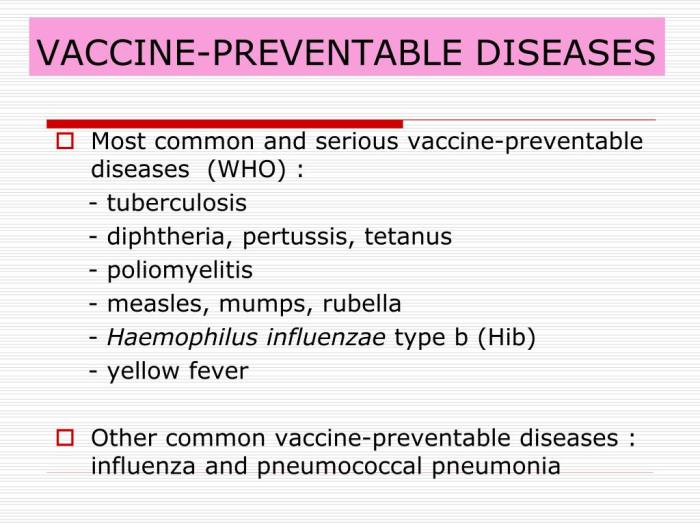
- Measles: A highly contagious viral infection that can lead to severe complications such as pneumonia and encephalitis.
- Pertussis (Whooping Cough): A respiratory disease that can be life-threatening, especially for infants.
- Polio: A crippling and potentially deadly infectious disease caused by the poliovirus.
- Hepatitis B: A viral infection that attacks the liver and can cause chronic liver disease.
Impact of Vaccination
Vaccination programs have significantly reduced the prevalence of many diseases. For instance, the introduction of the measles vaccine has led to a drastic decrease in measles cases and related deaths. Similarly, the global effort to eradicate polio through vaccination campaigns has brought us close to achieving this goal.
Risks of Not Vaccinating
- Increased Risk of Outbreaks: Not vaccinating can lead to outbreaks of preventable diseases, putting unvaccinated individuals and vulnerable populations at risk.
- Spike in Healthcare Costs: Treating vaccine-preventable diseases can be costly for individuals and healthcare systems, especially when dealing with large-scale outbreaks.
- Herd Immunity Erosion: When vaccination rates drop, herd immunity declines, leaving communities more susceptible to outbreaks and jeopardizing the protection of those who cannot be vaccinated due to medical reasons.
Conclusive Thoughts
As we conclude our discussion on vaccines for preventable diseases, remember that vaccination is a powerful tool in safeguarding public health and building a resilient community.
FAQ Explained
Can vaccines completely eradicate preventable diseases?
Vaccines play a crucial role in reducing and controlling the spread of preventable diseases, but complete eradication may depend on various factors such as vaccination coverage and virus mutations.
Are there any long-term risks associated with vaccination?
The long-term risks of vaccination are extremely rare compared to the potential benefits of preventing serious illnesses. Consult with healthcare professionals for personalized advice.
Do vaccines provide immediate immunity?
While some vaccines offer immediate protection, others may require multiple doses to build full immunity. It’s essential to follow the recommended vaccination schedules for optimal effectiveness.


