Dive deep into the world of depression with a focus on its causes and symptoms. Explore the intricacies of this mental health condition in a captivating and informative manner that will leave you enlightened.
Unravel the mysteries behind depression as we navigate through the various factors that contribute to its development and the signs that indicate its presence.
Causes of Depression
Depression can be caused by a variety of factors, ranging from genetic predispositions to environmental influences. Understanding these causes is crucial in effectively managing and treating the condition.
Genetics and Depression
Genetics play a significant role in predisposing individuals to depression. Research has shown that individuals with a family history of depression are more likely to develop the condition themselves. This suggests that certain genetic factors may increase susceptibility to depression.
Brain Chemistry Imbalances
Imbalances in brain chemistry, particularly neurotransmitters like serotonin and dopamine, can contribute to the development of depression. These chemicals play a crucial role in regulating mood, and disruptions in their levels can lead to symptoms of depression.
Traumatic Life Events
Traumatic life events, such as the loss of a loved one, abuse, or significant life changes, can trigger depressive episodes in susceptible individuals. The emotional toll of these events can overwhelm coping mechanisms and lead to the onset of depression.
Medical Conditions and Depression
Medical conditions like chronic illness can also influence the development of depression. The stress and challenges associated with managing a chronic illness can take a toll on mental health, increasing the risk of developing depressive symptoms.
Symptoms of Depression
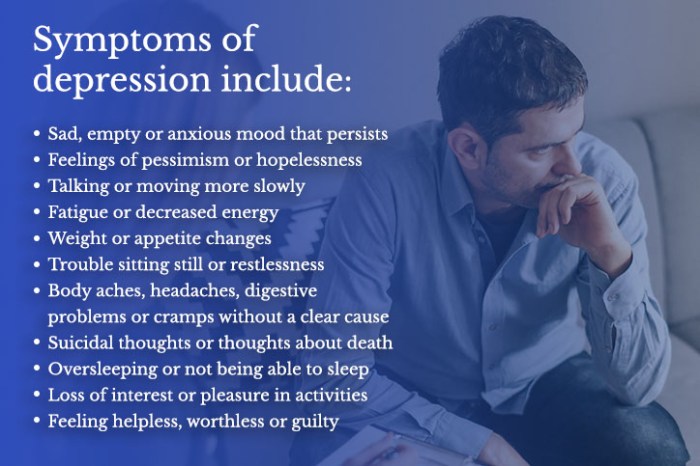
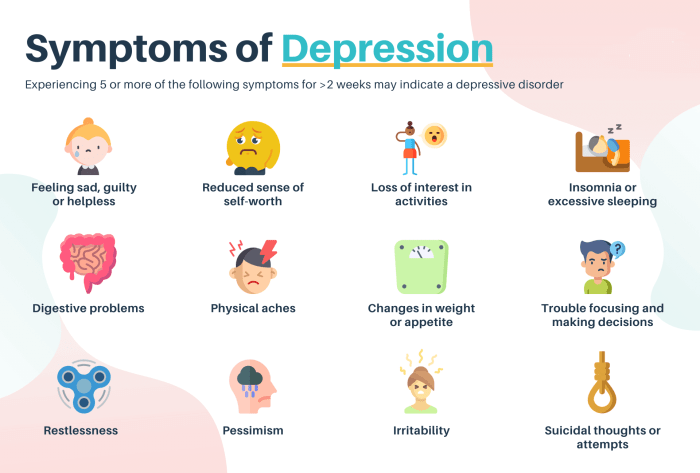
Depression can manifest in various ways, affecting a person’s emotions, physical health, cognitive abilities, and behaviors.
Emotional Symptoms
- Persistent feelings of sadness and hopelessness
- Loss of interest or pleasure in activities once enjoyed
- Increased irritability or frustration
- Feelings of guilt or worthlessness
Physical Symptoms
- Changes in appetite leading to weight loss or gain
- Disruption in sleep patterns, either insomnia or excessive sleeping
- Physical aches and pains without a clear cause
- Low energy levels and fatigue
Cognitive Symptoms
- Difficulty concentrating or making decisions
- Memory problems and forgetfulness
- Negative or distorted thinking patterns
- Thoughts of death or suicide
Behavioral Symptoms
- Social withdrawal and isolation from friends and family
- Decreased performance at work or school
- Avoidance of responsibilities and commitments
- Lack of interest in previously enjoyable activities
Conditions and Diseases Associated with Depression
Depression is often linked to various conditions and diseases, showing how interconnected mental health is with physical well-being.
Depression and Anxiety Disorders
Anxiety disorders and depression often coexist, with individuals experiencing symptoms of both conditions simultaneously. The constant worry and fear associated with anxiety can exacerbate feelings of sadness and hopelessness in those with depression.
Depression and Chronic Pain Conditions
There is a significant overlap between depression and chronic pain conditions, such as fibromyalgia and arthritis. The experience of persistent pain can lead to feelings of helplessness and isolation, contributing to the development or worsening of depression.
Depression and Substance Abuse Disorders
Depression and substance abuse disorders frequently occur together, forming a harmful cycle. Individuals may turn to drugs or alcohol as a way to cope with their depressive symptoms, which can lead to addiction and further exacerbate their mental health issues.
Depression and Eating Disorders
Depression is closely linked to eating disorders like anorexia and bulimia. Distorted body image, low self-esteem, and feelings of worthlessness commonly seen in depression can contribute to the development of these dangerous eating behaviors.
Epilogue
As we conclude our journey through the causes and symptoms of depression, remember that understanding these aspects is crucial in recognizing and addressing mental health challenges. Let’s continue to spread awareness and support for those in need.
FAQ Insights
Can depression be solely attributed to genetics?
While genetics can play a role in predisposing individuals to depression, environmental factors and life experiences also significantly contribute to its development.
Is social withdrawal always a sign of depression?
Social withdrawal can be a symptom of depression, but it is not exclusive to the condition. It’s essential to consider other factors and symptoms for an accurate diagnosis.
How do medical conditions like chronic illness impact depression?
Chronic illness can exacerbate feelings of depression due to the physical and emotional toll it takes on individuals. Managing both the illness and mental health is crucial for overall well-being.
What is the connection between depression and substance abuse disorders?
Depression and substance abuse often coexist, with individuals using substances as a way to cope with their depressive symptoms. Treatment for both conditions is essential for recovery.


