
Get ready to dive into the intriguing world of flu vs. cold symptoms and differences. This comparison will unravel the mysteries behind these common ailments, providing a clear picture of what sets them apart.
As we explore the symptoms, duration, severity, treatments, and prevention strategies, you’ll gain valuable insights to help you navigate through flu and cold seasons with ease.
Flu vs. Cold Symptoms
When it comes to flu vs. cold symptoms, there are some key differences to look out for. The flu, also known as influenza, is a respiratory illness caused by influenza viruses. On the other hand, the common cold is usually caused by rhinoviruses. Let’s explore the common symptoms of each to help differentiate between the two.
Common Symptoms of the Flu:
- Fever
- Chills
- Cough
- Sore throat
- Runny or stuffy nose
- Muscle or body aches
- Fatigue
- Headache
Typical Symptoms of a Common Cold:
- Runny or stuffy nose
- Sneezing
- Sore throat
- Cough
- Mild fatigue
Differentiating between Flu Symptoms and Cold Symptoms:
While both the flu and the common cold can present with respiratory symptoms, the flu tends to be more severe and comes on suddenly. In addition to respiratory symptoms, the flu often includes fever, body aches, and fatigue.
Cold symptoms are usually milder and come on gradually. There is less likelihood of severe complications with a cold compared to the flu.
Duration and onset
When it comes to the duration and onset of flu symptoms, there are some key differences compared to cold symptoms. The flu typically lasts longer and has a quicker onset than a common cold.
Duration of flu symptoms
The flu usually lasts for about 1 to 2 weeks, with some symptoms lingering even longer in certain cases. Symptoms such as fatigue and weakness can persist for several weeks after the initial onset of the flu.
Onset of flu symptoms
Flu symptoms tend to appear very suddenly, often within a matter of hours. This rapid onset can make the flu particularly challenging to deal with, as it can leave you feeling extremely unwell in a short amount of time.
Contrast with cold symptoms
In contrast, cold symptoms typically develop more gradually over a few days. While the flu hits you like a ton of bricks, a cold may start with a scratchy throat or sneezing before progressing to a runny nose and congestion. The duration of a cold is usually shorter, ranging from a few days to a week.
Severity and Complications
When it comes to the severity of flu symptoms, they are typically more intense and debilitating compared to the common cold. The flu often presents with sudden onset of symptoms such as high fever, body aches, fatigue, and respiratory issues.
Severity of Flu Symptoms
- High fever above 100.4°F
- Severe body aches and muscle pain
- Extreme fatigue and weakness
- Dry cough and sore throat
Potential Complications of the Flu
- Pneumonia
- Bronchitis
- Sinus infections
- Ear infections
- Worsening of chronic medical conditions
Comparison of Severity and Complications
When comparing the severity and complications of a cold versus the flu, it is evident that the flu is more severe and can lead to more serious complications. While a cold may cause mild symptoms like a runny nose or sore throat, the flu can result in high fever, body aches, and respiratory issues. Additionally, the flu is more likely to lead to complications such as pneumonia, bronchitis, and sinus infections, especially in high-risk individuals like the elderly or those with weakened immune systems.
Treatments and remedies
When it comes to treating the flu and alleviating cold symptoms, there are various options available to help you feel better and recover faster.
Common treatments for the flu
- Rest: One of the most important things you can do when you have the flu is to get plenty of rest to help your body fight off the virus.
- Stay hydrated: Drink plenty of fluids, such as water, herbal tea, and clear broths, to help prevent dehydration.
- Over-the-counter medications: Antiviral drugs may be prescribed by your doctor to help reduce the severity of symptoms and shorten the duration of the flu.
- Symptom relief: Over-the-counter medications like acetaminophen or ibuprofen can help reduce fever and alleviate body aches and pains.
- Seek medical attention: In severe cases, especially if you are at high risk for complications, it’s important to see a healthcare provider for further evaluation and treatment.
Effective remedies for alleviating cold symptoms
- Stay hydrated: Drinking warm fluids like herbal tea, soup, or warm water with honey and lemon can help soothe a sore throat and keep you hydrated.
- Rest: Just like with the flu, getting plenty of rest is crucial to help your body recover from a cold.
- Steam inhalation: Inhaling steam from a bowl of hot water can help relieve nasal congestion and ease breathing.
- Warm saltwater gargle: Gargling with warm salt water can help soothe a sore throat and reduce inflammation.
- Over-the-counter remedies: Cold medications like decongestants, antihistamines, and pain relievers can help alleviate cold symptoms like nasal congestion, runny nose, and headache.
Overlapping treatments
- Rest: Both the flu and cold require plenty of rest to allow your body to recover and heal.
- Stay hydrated: Keeping yourself hydrated is important for both conditions to help flush out toxins and keep your body functioning properly.
- Symptom relief: Over-the-counter medications like acetaminophen or ibuprofen can be used to alleviate common symptoms of both the flu and cold, such as fever and body aches.
Prevention strategies
Preventing the flu and colds is essential to maintaining good health and avoiding the unpleasant symptoms that come with these illnesses. Here are some strategies to help you stay healthy:
Preventing the flu
- Get vaccinated annually with the flu shot to protect yourself and others.
- Practice good hygiene by washing your hands frequently with soap and water.
- Avoid close contact with sick individuals to reduce your risk of exposure.
- Stay home if you are feeling unwell to prevent spreading the flu to others.
- Boost your immune system with a healthy diet, regular exercise, and adequate rest.
Preventing a cold
- Wash your hands regularly to reduce the spread of cold viruses.
- Avoid touching your face, especially your eyes, nose, and mouth, to prevent germs from entering your body.
- Cover your mouth and nose with a tissue or your elbow when you cough or sneeze to prevent spreading the virus.
- Disinfect frequently touched surfaces, such as doorknobs and light switches, to kill cold viruses.
- Stay hydrated and eat a balanced diet to keep your immune system strong and able to fight off colds.
Comparing preventive strategies for flu and colds
While the prevention strategies for flu and colds share some similarities, such as practicing good hygiene and staying home when sick, there are also differences in how each illness spreads and the availability of vaccines. Getting vaccinated for the flu is a key preventive measure that is not available for the common cold. However, both illnesses can be avoided by adopting healthy habits and taking steps to reduce exposure to germs.
Conditions and diseases
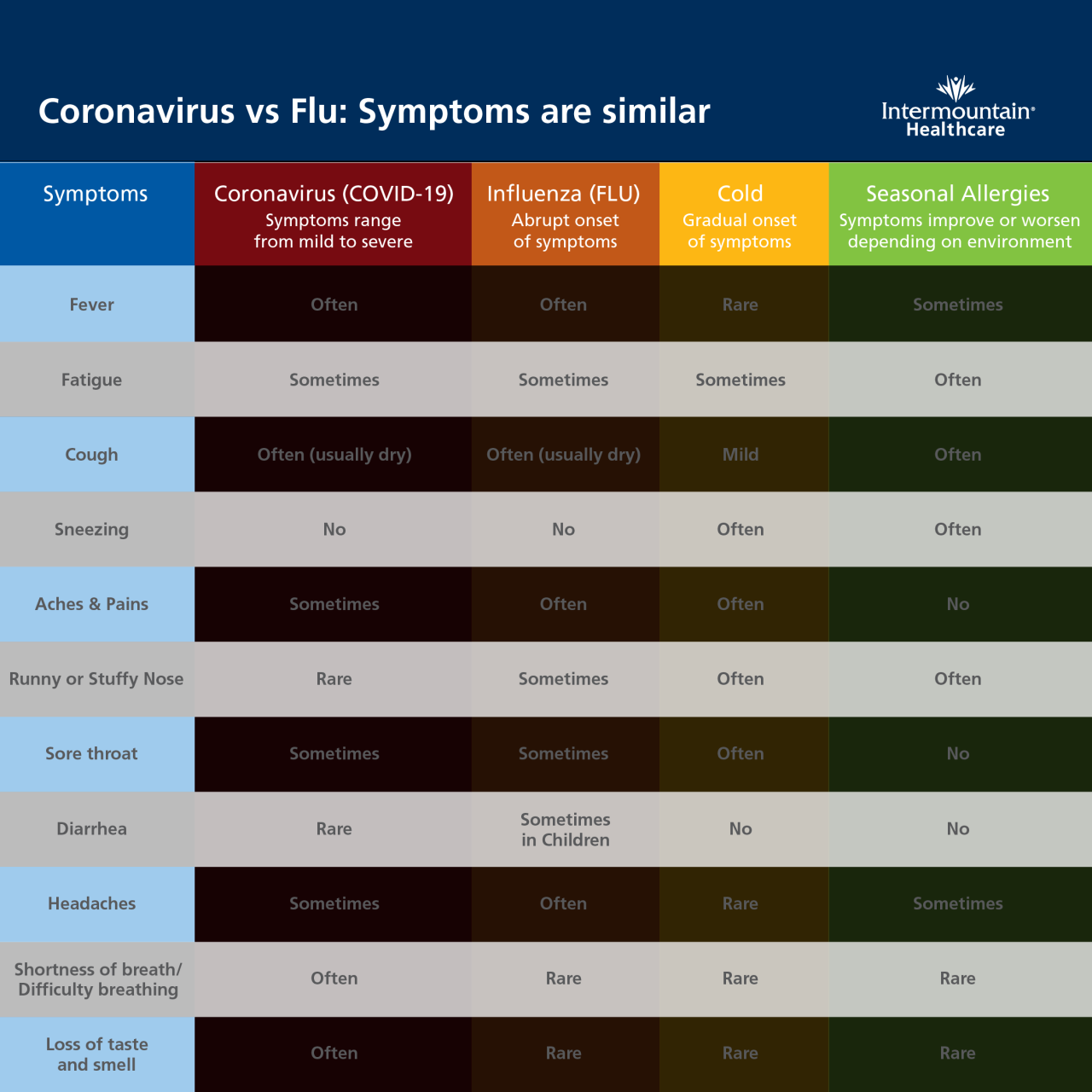
In addition to the flu, there are several other conditions and diseases that share similar symptoms, making it important to differentiate between them to receive the appropriate treatment.
Pneumonia
Pneumonia is a serious infection that affects the lungs and can cause symptoms similar to the flu, such as fever, cough, and difficulty breathing. However, pneumonia is usually accompanied by more severe symptoms and requires immediate medical attention.
COVID-19
COVID-19, caused by the novel coronavirus, shares many symptoms with the flu, including fever, cough, and fatigue. However, COVID-19 can also cause loss of taste or smell, which is less common with the flu. Testing is necessary to differentiate between the two illnesses.
Allergies
Allergies can sometimes be mistaken for the flu due to symptoms like sneezing, runny nose, and congestion. However, allergies do not typically cause fever or body aches, which are common with the flu.
Sinusitis
Sinusitis, an inflammation of the sinuses, can cause symptoms similar to the flu, such as facial pain, nasal congestion, and post-nasal drip. However, sinusitis is not typically associated with systemic symptoms like fever and body aches.
When to seek medical attention
If you are experiencing flu-like symptoms and are in a high-risk group for complications, such as young children, older adults, pregnant women, or individuals with underlying health conditions, it is important to seek medical attention promptly. Additionally, if your symptoms are severe or persist for an extended period, it is best to consult a healthcare provider for proper evaluation and treatment.
Closing Summary
In conclusion, understanding the distinctions between flu and cold symptoms is key to effectively managing your health. Armed with this knowledge, you can take proactive steps to stay well and make informed decisions when seeking medical attention.
FAQ Summary
What is the main difference between flu and cold symptoms?
Flu symptoms tend to be more severe and come on suddenly, while cold symptoms are milder and develop gradually.
How can I differentiate between the onset of flu and cold symptoms?
Flu symptoms usually appear within 1-4 days of exposure, whereas cold symptoms may take several days to manifest after exposure.
Are there any specific complications associated with the flu?
Yes, the flu can lead to serious complications such as pneumonia, bronchitis, and even hospitalization in severe cases.
What are some overlapping treatments for flu and cold symptoms?
Both flu and cold symptoms can be alleviated with rest, hydration, over-the-counter medications, and sometimes antiviral drugs for the flu.
How can I prevent catching the flu or a cold?
Practicing good hygiene, getting vaccinated for the flu, and avoiding close contact with sick individuals are effective prevention strategies.


